
😅 This Started With Pure Frustration
I can’t even count how many times this has happened. I’d sit down thinking, “Let’s quickly set up a Kubernetes cluster.” It always starts simple. Nothing fancy, just a quick setup for testing or deployment. But somehow, it never stays simple for long.
First, the container runtime takes longer than expected. Then kubeadm init throws warnings you didn’t see last time. The worker node refuses to join for no clear reason. And just when you think you’re close, networking breaks. Again.
At some point, you’re just staring at logs, trying to figure out what exactly went wrong. And before you realize it, your “quick setup” has turned into a full evening of debugging.
🤯 The Real Problem Isn’t Kubernetes
The interesting part is — Kubernetes itself isn’t the problem. It’s everything around it.
You’re constantly dealing with environment differences, dependency issues, firewall rules, and configuration mismatches. Something that worked perfectly yesterday suddenly fails today on a different system.
Even worse, the errors don’t always help. You see vague messages that don’t clearly point to the issue, and you end up spending more time diagnosing the problem than actually building anything.
In fact, most Kubernetes failures aren’t because of bugs in Kubernetes at all. They’re caused by misconfiguration — small things that are easy to miss but hard to debug.
💡 The Thought That Changed Everything
After going through this cycle again and again, one question stuck with me: why is this still so manual?
We’ve automated almost everything in DevOps — CI/CD pipelines, infrastructure provisioning, scaling systems. But Kubernetes setup still feels like a checklist you have to execute step by step.
That’s when I decided to stop working around the problem and try to solve it.
🔨 How KubeEZ Started
I didn’t begin with a big vision or a product roadmap. I just wanted something that could save me time and reduce frustration.
Something that could handle the repetitive steps, catch common mistakes, and work reliably across different environments. Something that didn’t require constant attention and manual fixes.
After a lot of trial and error, testing, and rebuilding, that idea turned into KubeEZ.
⚙️ What Using KubeEZ Feels Like
The biggest change KubeEZ brings is simplicity.
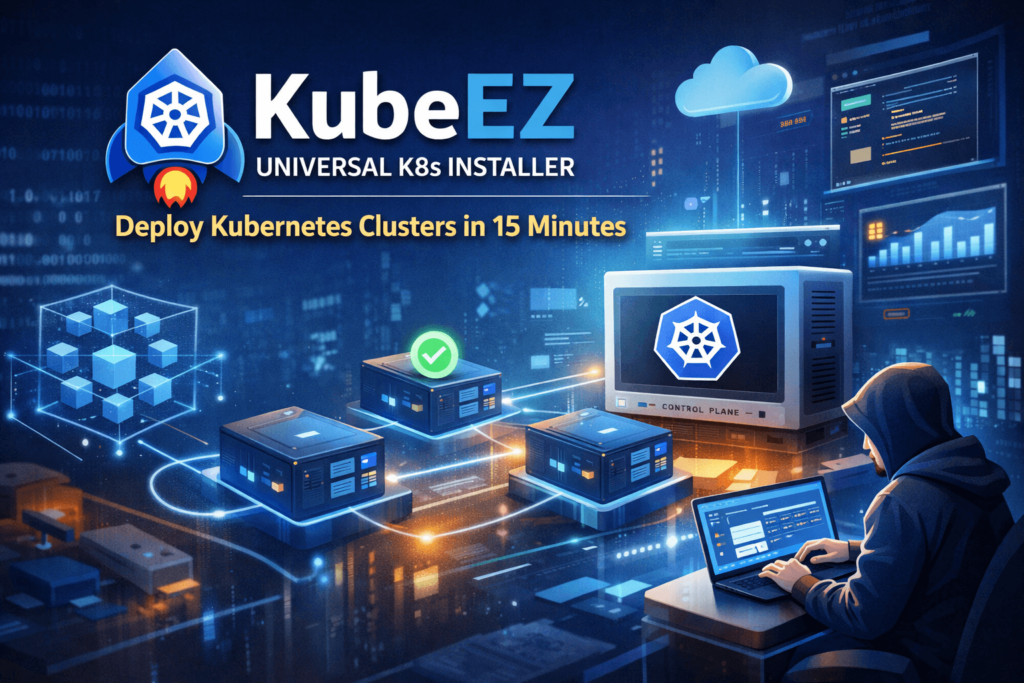
Instead of running dozens of commands and checking multiple configurations, you just set up your nodes, click install, and let the system handle the rest. Everything runs in the background while you can actually see what’s happening in real time.
There’s no guessing, no jumping between documentation pages, and no repeated trial-and-error loops. It just feels… smooth.
🚀 Features That Came from Real Problems
Every part of KubeEZ is built from real-world issues I faced.
The one-click setup removes the need for long command chains that you have to remember or copy from guides. Multi-node support makes it usable beyond local testing environments. Multi-OS compatibility ensures it works whether you’re using Ubuntu, CentOS, or AlmaLinux.
Real-time logs give full visibility into what’s happening during installation, which makes a huge difference when something goes wrong. The auto-fix feature handles common issues automatically, which is something I personally wished existed earlier.
And the 3D cluster visualization, while not strictly necessary, adds a completely new level of clarity. Instead of imagining your cluster structure, you can actually see it.
🎥 See It in Action
If you want to understand it better, watching it in action makes a big difference:
👉 https://www.youtube.com/watch?v=j_RAisyTAeY
⏱️ What Actually Changed
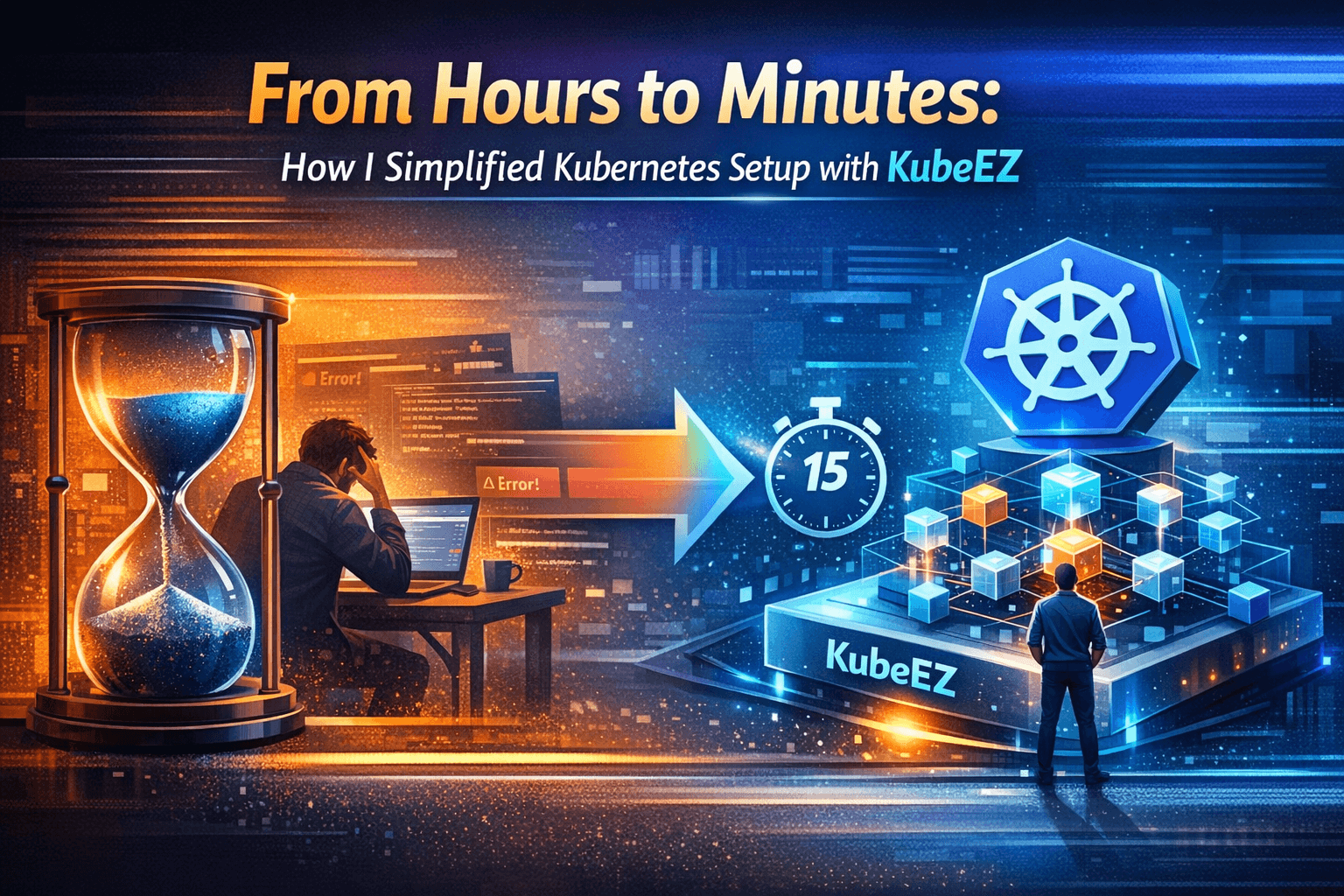
Before using KubeEZ, setting up a cluster could easily take one to three hours. Debugging issues was slow and frustrating, and the process often felt repetitive.
With KubeEZ, the same setup takes around 10 to 15 minutes. Debugging is minimal because most common issues are handled automatically, and the entire process feels much more predictable.
More than just saving time, it removes the mental fatigue that comes with repeated troubleshooting.
🧑💻 Who This Is For
This tool is for anyone who works with Kubernetes and doesn’t want to spend unnecessary time on setup.
If you’re a DevOps engineer, cloud engineer, freelancer, or even someone learning Kubernetes, this can make your workflow smoother and more efficient. Especially if you’ve ever felt that setup is taking more effort than it should.
💻 How You Can Try It
I kept the access process simple and affordable so more people can try it and give feedback.
👉 https://k8s-installers.vercel.app/
The process is straightforward. You open the link, complete the payment using UPI, submit your transaction ID, and you’ll get access to the private GitHub repository.
🔮 What’s Next
This is still just the beginning. There are a lot of improvements planned, including cluster upgrades, backup and restore features, security integrations, and multi-cloud support.
The goal is to keep making Kubernetes easier without removing the flexibility that makes it powerful.
🤝 Final Thoughts
Kubernetes isn’t going anywhere, and it shouldn’t. It’s one of the most powerful tools we have.
But the experience around setting it up can definitely be better.
KubeEZ is my attempt to make that experience simpler, faster, and less frustrating — especially for people who deal with this regularly.
💬 I’d Really Like Your Feedback
If you try it, I’d genuinely like to know your experience.
What worked well, what didn’t, and what you think should be improved. That kind of feedback is what will shape the next version.