

🔍 Introduction
Artificial Intelligence (AI) is no longer just a defensive weapon in cybersecurity — it has become the offensive arsenal of modern threat actors.
In 2025, we’re witnessing an unprecedented wave of AI-driven cyber threats — attacks that are faster, more adaptive, and nearly impossible to detect using traditional tools. From deepfake-based social engineering to autonomous exploitation bots, adversaries are now using the same AI models that defenders rely on.
According to the World Economic Forum’s Global Cybersecurity Outlook 2025, over 47% of organizations identify adversarial AI as their top emerging risk. This shift signals a new era: one where machine intelligence directly contests human defense logic.
🧠 1. The Rise of AI-Powered Attack Automation
Attackers now leverage Large Language Models (LLMs) and machine learning pipelines to automate reconnaissance, exploit development, and data exfiltration.
Example:
An attacker feeds vulnerability scan results into a fine-tuned AI agent. Within minutes, the model identifies the most exploitable weakness, crafts a phishing email that mimics internal tone, and even adjusts its payload based on real-time API responses.
Key risks:
- Real-time adaptive phishing and spear-phishing campaigns
- Automated vulnerability exploitation using AI-powered bots
- AI-assisted malware that changes signatures dynamically
Image:
🕵️ 2. Deepfake Phishing and Synthetic Identity Attacks
Deepfake videos and cloned voice technology are now weaponized at scale. Cybercriminals create realistic impersonations of executives or DevOps leads to authorize payments, deployments, or data transfers.
A recent Europol report highlights that AI-enabled social engineering has led to a 300% rise in financial fraud incidents across Europe in 2025.
Real-world example:
A Hong Kong-based firm lost $25 million after a CFO was deceived by a deepfake video call mimicking their CEO.
Implication for DevOps teams:
Even internal CI/CD approvals can be tricked if voice-based or chat confirmations aren’t properly authenticated.
Image:
🧩 3. Data Poisoning and Model Manipulation
Adversaries have shifted from attacking applications to attacking data and AI models themselves.
In data poisoning, attackers insert manipulated samples into AI training datasets. This causes the model to behave maliciously in production — e.g., whitelisting certain IPs, misclassifying threats, or ignoring injected code patterns.
Example in DevOps:
A compromised dataset used for a security anomaly detector in CI pipelines might learn to ignore certain malicious build signatures.
Defense recommendations:
- Validate and checksum datasets before training
- Monitor drift and anomalies in AI outputs
- Implement continuous model validation (MLOps security)
Image:
⚙️ 4. AI Exploitation in Cloud & DevOps Environments
In hybrid DevOps setups (OpenShift, EKS, Tanzu), attackers exploit misconfigured AI-assisted automation tools (like auto-scaling bots or IaC analyzers).
They manipulate these tools to trigger automated actions — such as resource deployment or permission escalations — that lead to privilege gain or lateral movement.
Key scenarios:
- Exploiting GitHub Copilot or AI-based pipeline suggestions to inject insecure code
- Manipulating IaC validation scripts powered by LLMs
- Targeting AI-based monitoring tools via adversarial prompts or model corruption
Mitigation strategies:
- Enforce human approval for AI-assisted deployment recommendations
- Limit AI service API keys and isolate them from production clusters
- Audit AI integrations for data leakage
Image: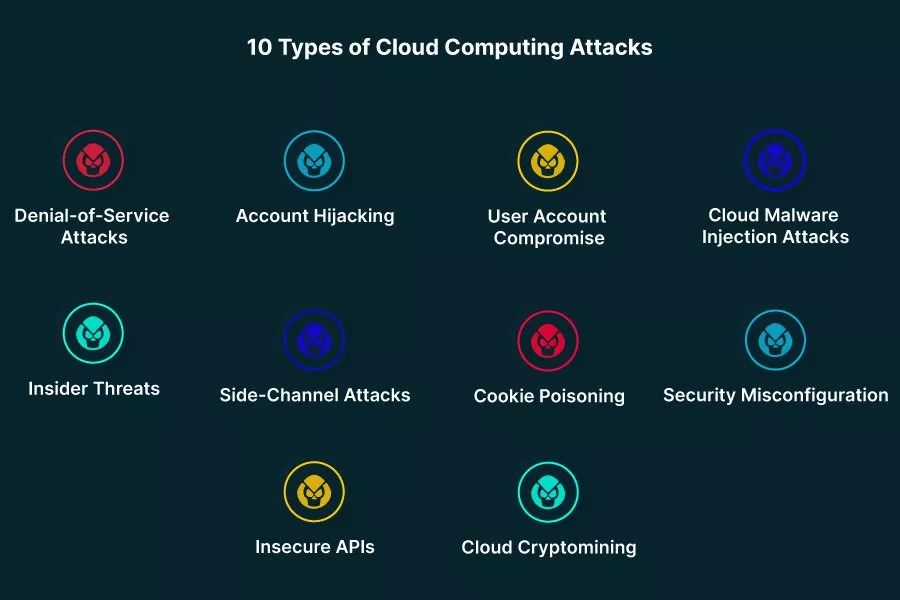
🛡️ 5. Countermeasures — Building AI-Resilient Defense
Defending against AI-driven cyber threats requires AI-literate security operations and DevSecOps practices.
Recommended Actions:
- Adopt Adversarial AI Testing:
Test your own AI systems against simulated attacks (prompt injection, model corruption). - Secure MLOps Pipelines:
Harden the entire AI lifecycle — training, validation, deployment — using signed datasets and RBAC enforcement. - Implement AI Usage Governance:
Track and document every AI model or integration used within CI/CD pipelines. - Enhance Human-AI Collaboration:
Combine machine-learning insights with analyst validation instead of relying on full automation.
Frameworks & Tools:
- NIST AI Risk Management Framework
- OWASP Machine Learning Security Project
- MLflow + Kubeflow for secure model orchestration
Image:
🚨 Key Takeaways
- Attackers now use AI to scale attacks faster than human analysts can respond.
- Deepfake-based phishing and synthetic identity fraud are the new social-engineering frontiers.
- DevOps and cloud teams must focus on AI model integrity, dataset validation, and human oversight.
- Building an AI Security Posture (AISecOps) is essential in 2025.