
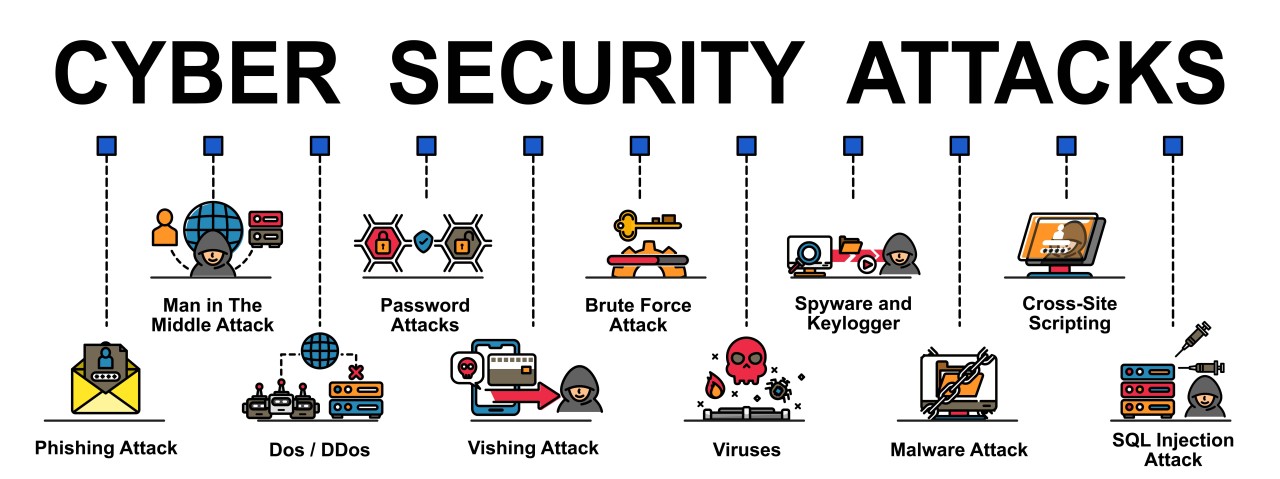
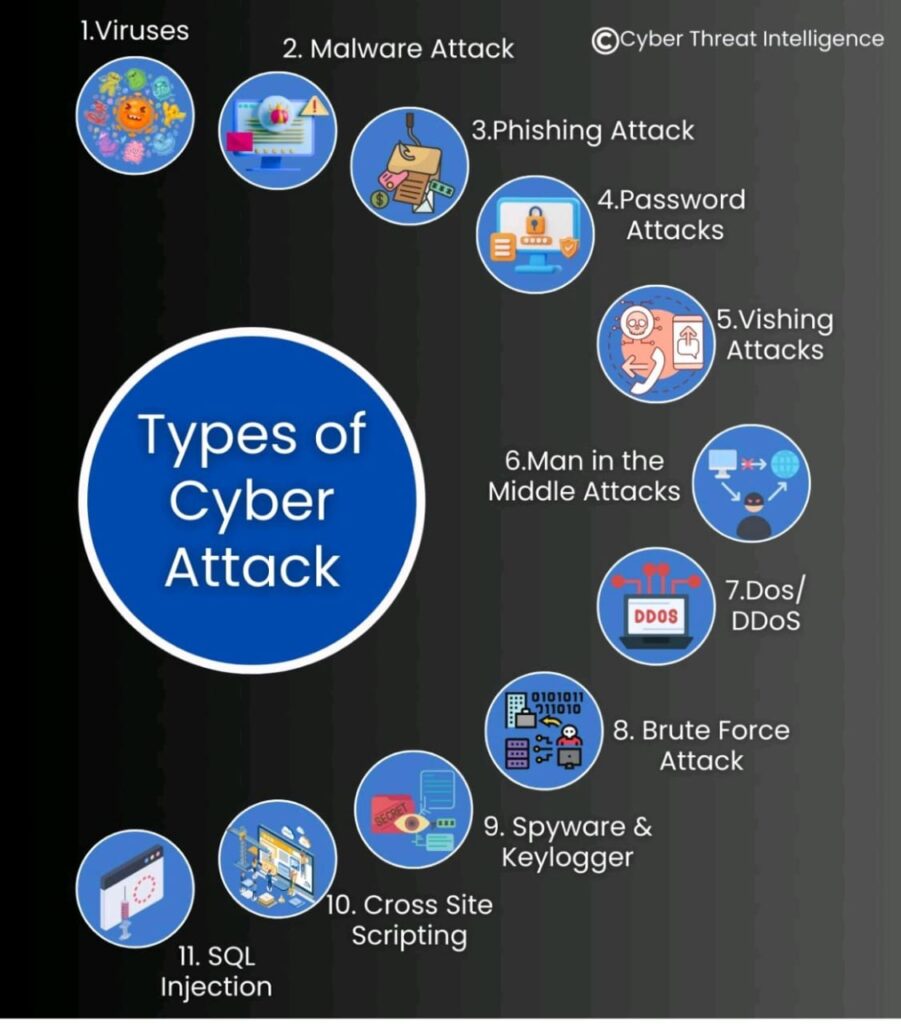
🦠 Viruses
Description: Malicious software that attaches to clean files and spreads throughout a computer system.
Impact: Can corrupt or delete data, and spread to other systems.
💻 Malware Attack
Description: Any software intentionally designed to cause damage to a computer, server, or network.
Impact: Can lead to data theft, system damage, or unauthorized access.
📧 Phishing Attack
Description: Attempts to acquire sensitive information by masquerading as a trustworthy entity in electronic communication.
Impact: Can result in stolen credentials and financial loss.
🔑 Password Attacks
Description: Attempts to steal or decrypt user passwords to gain unauthorized access to systems.
Impact: Can lead to account takeovers and data breaches.
📞 Vishing Attacks
Description: Voice phishing, where attackers use phone calls to trick individuals into revealing personal information.
Impact: Can result in identity theft and financial fraud.
🔗 Man-in-the-Middle (MitM)
Description: An attack where the attacker secretly intercepts and relays messages between two parties.
Impact: Can lead to data manipulation and eavesdropping.
🌐 DDoS (Distributed Denial of Service)
Description: An attack that overwhelms a network or service with traffic to render it unusable.
Impact: Can cause downtime and loss of revenue for businesses.
🔍 Brute Force Attack
Description: A method of trial and error used to decode encrypted data such as passwords or encryption keys.
Impact: Can compromise accounts and sensitive information.
🕵️♂️ Spyware & Keylogger
Description: Software that secretly monitors user activity and collects information such as keystrokes.
Impact: Can lead to privacy breaches and identity theft.
💾 SQL Injection
Description: An attack that involves inserting malicious SQL statements into a query to manipulate a database.
Impact: Can compromise databases and expose sensitive data.
🖥️ Cross-Site Scripting (XSS)
Description: An attack that allows attackers to inject malicious scripts into content from otherwise trusted websites.
Impact: Can lead to data theft and session hijacking.
🛡️ Conclusion
Understanding these types of attacks is crucial for developing better security measures. By being aware of these threats, individuals and organizations can enhance their defenses against cyber risks. attacks is crucial for developing better security measures and protecting sensitive information.