
Managing modern, distributed applications is no small feat. Ensuring they remain reliable, scalable, and fault-tolerant demands advanced orchestration.
That’s where Kubernetes (K8s) shines 🌟 — an open-source container orchestration platform that automates deployment, scaling, and operations of application containers.
Let’s break down the core components of Kubernetes, so you can understand what powers the cloud-native world today.

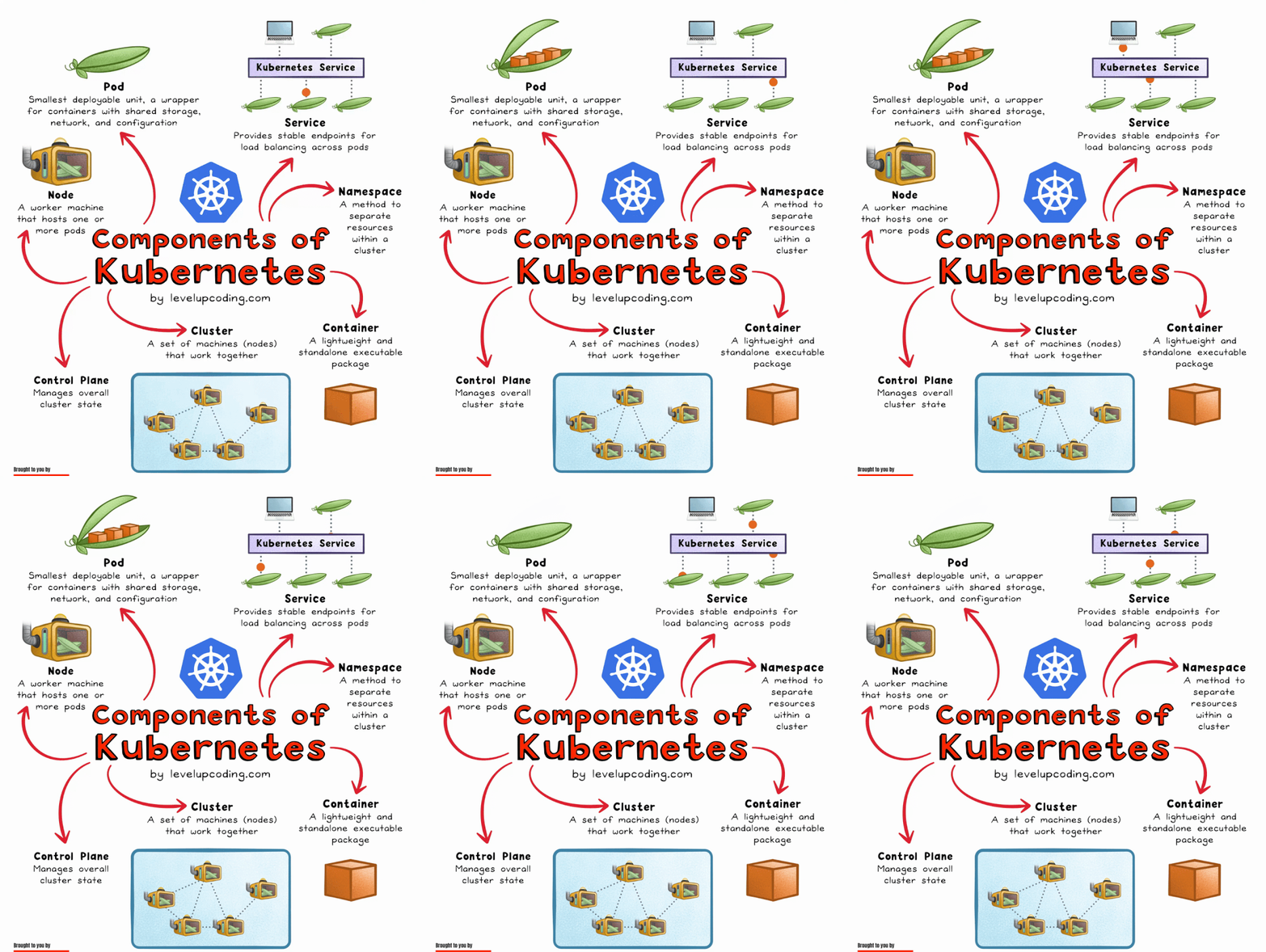
🧩 1. Node
🔧 Definition: A physical or virtual machine that runs containerized applications.
🧱 What it does: Nodes host Pods, the smallest deployable units in Kubernetes.
📦 2. Pod
🐳 Definition: The smallest deployable unit in K8s.
🪴 Contains: One or more containers sharing storage, network, and specs.
💡 Ideal when containers need to run together (e.g., sidecar patterns).
🧠 3. Control Plane
🧭 The brain of the cluster, managing its overall state.
Composed of:
- 🧩 API Server: Handles REST requests from users and components.
- 🧩 Scheduler: Assigns Pods to the best-suited Nodes.
- 🧩 Controller Manager: Monitors cluster state and acts to match the desired configuration.
- 🧩 etcd: A distributed key-value store holding all cluster data.
🛰️ 4. Service
🔁 Definition: A stable network endpoint that abstracts and balances traffic to a group of Pods.
💡 Supports service discovery, load balancing, and external access.
🌐 5. Ingress
🌍 Manages: External HTTP/HTTPS access to services inside the cluster.
🚦 Acts like a traffic controller, routing requests to the right services via paths and domains.
🧭 6. Namespace
🔒 Definition: A virtual cluster within a Kubernetes cluster.
📦 Used to organize and isolate resources (great for multi-tenancy or staging/prod setups).
🗃️ 7. Persistent Volume
💾 Purpose: Decouple storage from Pods.
🔁 Ensures data is retained across container restarts or deletions.
👥 8. Cluster
🕸️ A group of Nodes working together as a single system.
📡 Managed by the Control Plane and forms the basic unit of your K8s infrastructure.
⚙️ 9. Container
📦 A self-contained environment that packages an app and all its dependencies.
💨 Lightweight, portable, and consistent across environments.
🧠 Summary
Kubernetes provides a resilient, scalable, and modular approach to running modern applications. It’s the gold standard in DevOps for managing containers at scale — but it comes with a learning curve.
For simpler apps, tools like Docker Swarm or Heroku might be better suited. But if you’re managing large, dynamic, or mission-critical systems, Kubernetes is a game changer 💥
💬 What do you think?
Have you worked with K8s? Which component do you find most fascinating? Let’s discuss in the comments! 💭