
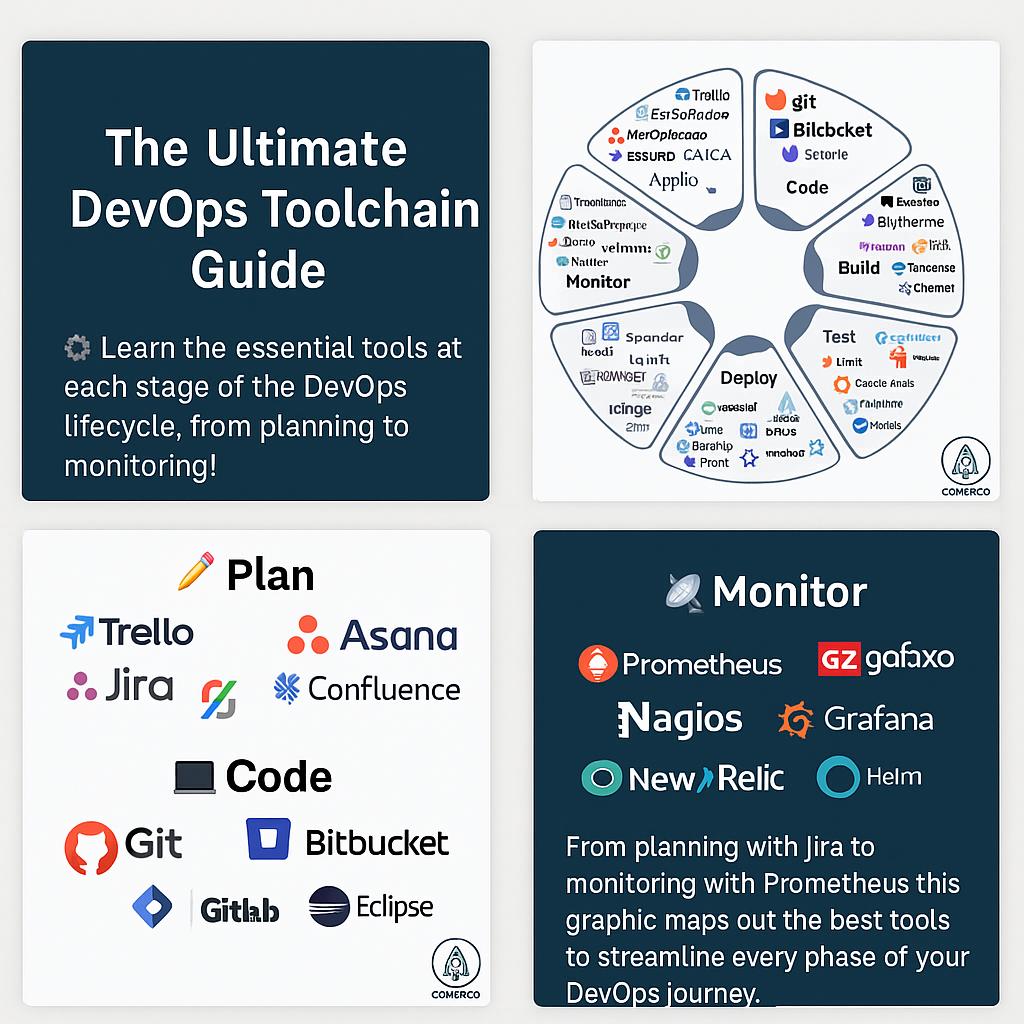
DevOps isn’t just a buzzword—it’s a culture and set of practices that bring development and operations teams together for faster, more reliable software delivery. With dozens of tools available, knowing which tool fits where in the DevOps lifecycle is critical. Let’s explore each phase in the DevOps pipeline with the most popular tools you can use today! 🔄⚙️
🧠 1. Plan 🗂️
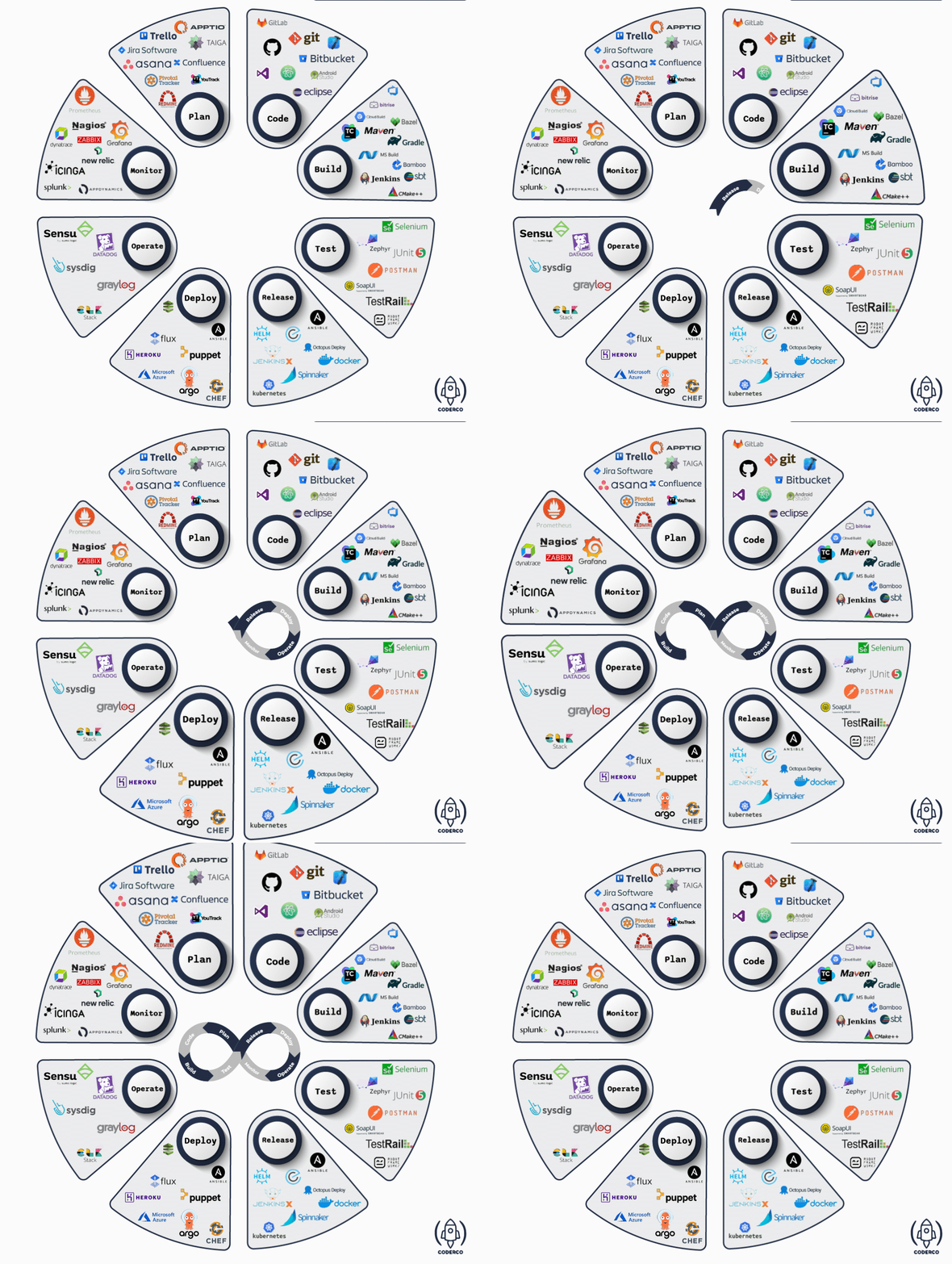
Tools: Trello, Jira, Asana, Confluence, YouTrack, Taiga, Redmine, Pivotal Tracker, Apptio
Planning is the first step in the DevOps cycle. It involves defining goals, writing user stories, and creating a backlog.
📝 Tools like Jira and Trello help teams organize sprints, manage tickets, and prioritize features.
📊 Apptio brings financial transparency to the planning process.
💡 Agile boards, sprint backlogs, and Gantt charts rule this space.
💻 2. Code 👨💻
Tools: Git, GitLab, GitHub, Bitbucket, Visual Studio, Android Studio, Eclipse
The coding phase involves writing, reviewing, and versioning the source code.
🔁 Git-based tools like GitHub, GitLab, and Bitbucket provide version control and collaboration.
💻 IDEs such as Eclipse and Visual Studio streamline code authoring and debugging.
✨ Pro Tip: Branching strategies like Git Flow optimize collaboration.
🏗️ 3. Build 🔧
Tools: Jenkins, Maven, Gradle, Bamboo, Bazel, CMake, SBT, TeamCity
Once the code is ready, it’s compiled, dependencies are resolved, and artifacts are built.
⚙️ Jenkins and TeamCity automate the build pipelines.
📦 Maven and Gradle handle project dependencies and packaging.
🚀 This is where CI (Continuous Integration) kicks in.
🧪 4. Test 🧬
Tools: Selenium, JUnit, Postman, TestRail, Zephyr, SoapUI
Testing ensures software quality before it hits production.
🧫 Tools like Selenium and JUnit enable automated unit and UI testing.
📮 Postman and SoapUI test APIs effectively.
✅ Continuous Testing = Catch bugs before users do.
🚚 5. Release 📦
Tools: Jenkins X, Spinnaker, Octopus Deploy, Docker, Kubernetes, Helm, Ansible
The release phase is where your tested application is packaged and deployed to staging or production.
🐳 Docker containers and Helm charts make app delivery portable.
📈 Tools like Spinnaker and Octopus Deploy automate release pipelines.
🔐 Ansible is popular for configuration management.
🔄 Canary, Blue-Green, and Rolling deployments are supported here.
🚀 6. Deploy ☁️
Tools: Puppet, Chef, ArgoCD, Heroku, Flux, Microsoft Azure, Ansible
Deployment is about provisioning environments and moving code to production.
🧠 Puppet, Chef, and Ansible ensure infrastructure as code.
🚀 ArgoCD enables GitOps for Kubernetes.
🛰️ With cloud-native and multi-cloud support, deployments are now smarter than ever.
⚙️ 7. Operate 🧩
Tools: Datadog, Sensu, Graylog, Sysdig, ELK Stack
Operating is all about managing infrastructure and keeping systems running smoothly.
📈 Tools like Datadog and Sysdig provide real-time operational insights.
🔍 Graylog and ELK Stack handle log aggregation and analysis.
📊 Visibility = Stability.
🔍 8. Monitor 🛰️
Tools: Prometheus, Grafana, Zabbix, Nagios, New Relic, AppDynamics, Splunk, Dynatrace, Icinga
Monitoring ensures that your applications and infrastructure are always observable.
📡 Prometheus and Grafana shine in time-series monitoring and visual dashboards.
💡 New Relic, Dynatrace, and AppDynamics provide full-stack performance insights.