

The day I realized how powerful AI in DevOps workflows could be
It started with a 2 a.m. Slack alert.
Our Kubernetes deployment had failed—again. I was half-asleep, ready to debug another YAML nightmare, when I saw something new in the thread:
“I’ve analyzed the last five pipeline runs. The error seems related to a version mismatch in
values.yaml. Would you like me to auto-rollback?”
It wasn’t a teammate. It was our new AI-powered DevOps assistant, freshly integrated into our DevOps workflow.
And it was right.
That moment made me realize that AI in DevOps workflows isn’t just hype—it’s a genuine shift in how we build, deploy, and maintain systems.
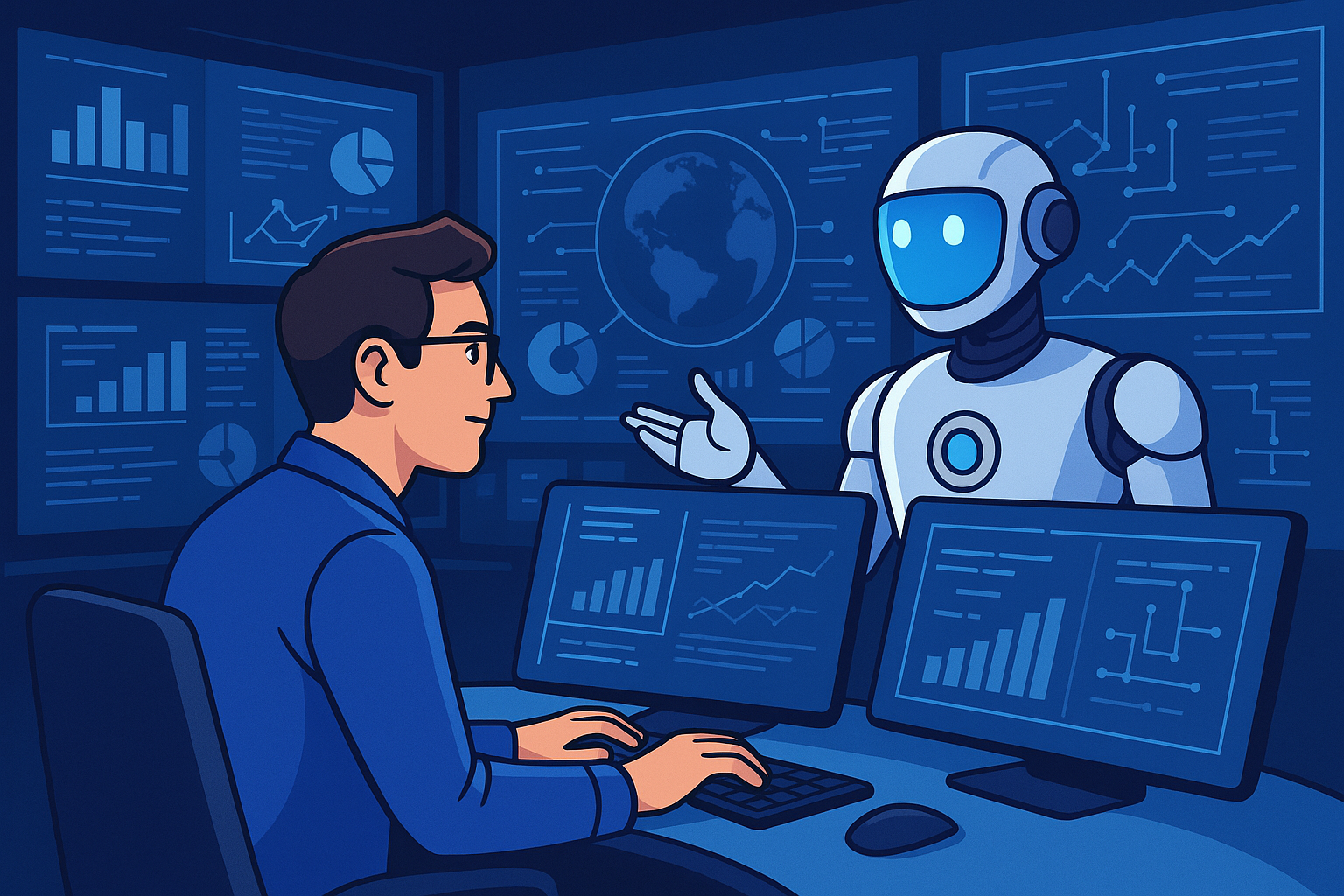
🧠 How AI in DevOps Workflows Is Changing the Game
AI has become more than just a buzzword in the DevOps community. It’s reshaping how pipelines are designed, monitored, and optimized.
Here’s how it’s transforming DevOps workflows everywhere:
- Predictive Automation – AI predicts deployment failures before they happen.
- Smart Monitoring – Instead of reactive alerts, AI correlates logs, metrics, and events to suggest proactive fixes.
- Code Optimization – AI tools like GitHub Copilot and Tabnine help write infrastructure-as-code faster and cleaner.
- ChatOps Reinvented – AI-driven chatbots now execute CI/CD jobs, analyze pipelines, and generate rollback plans on the fly.
In short, AI in DevOps workflows turns your tools into intelligent teammates—an extra brain that never sleeps.
⚙️ Real Example: How AI Fixed Our CI/CD Pipeline Faster Than We Could
During a major migration, our CI/CD pipeline kept failing due to inconsistent artifact versions.
We connected our observability platform with an LLM-powered DevOps assistant to analyze logs automatically. Within minutes, it found:
“Artifact A built at 14:52 was deployed to staging A, but artifact B from 14:48 was promoted to production.”
That insight would’ve taken an engineer hours. AI spotted it instantly.
But here’s the twist — the AI didn’t fix the process; we did. It showed us what was wrong, not how to redesign it.
This is where human expertise meets AI precision — the real magic of AI in DevOps workflows.
🔍 How AI in DevOps Workflow Rewrites a DevOps Engineer’s Day
| Before AI | After AI in DevOps Workflow |
|---|---|
| Manual build reviews | AI summarizes and categorizes pipeline failures |
| Late-night alerts | AI prioritizes and correlates incidents |
| Scripting repetitive checks | Natural-language prompts trigger automation |
| Guessing root causes | AI suggests probable issues based on patterns |
AI doesn’t take jobs—it removes the toil that slows us down.
💬 Why DevOps Engineers Still Matter
At first, I worried AI might replace us.
Then I realized: AI knows syntax and patterns, but not context or intent.
Humans understand architecture, governance, compliance, and user impact—things AI can’t yet comprehend.
So instead of fearing AI, I embraced it as a co-pilot—it handles the noise so I can focus on strategy, mentoring, and innovation.
📈 Data Shows AI in DevOps Workflow Is Here to Stay
- Gartner 2025: 65% of DevOps teams use AI/ML to enhance observability and automation.
- GitLab 2024: 72% of DevOps teams reported reduced MTTR with AI-driven insights.
- Forrester: AI-enabled DevOps workflows deliver 40% faster deployment cycles.
Clearly, AI in DevOps workflows isn’t optional anymore—it’s essential.
🧭 How to Adopt AI in Your DevOps Workflow
- Start Small – Integrate AI for anomaly detection or alert clustering first.
- Train the Model – Feed your pipeline and observability data to improve accuracy.
- Stay in Control – Always validate AI suggestions before automating actions.
- Upskill Your Team – Learn AI prompt engineering and AIOps basics.
The faster you adapt, the sooner your team becomes an AI-augmented DevOps powerhouse.
✍️ Conclusion
AI in DevOps workflows isn’t replacing engineers — it’s empowering them.
It’s helping us move from reactive firefighting to proactive decision-making.
In the near future, we won’t talk about “AI in DevOps” anymore. It will just be DevOps — faster, smarter, and more collaborative than ever.g it—will lead the next generation of engineering.